
19th-Century Kashmiri Silver Beaker with Chinar Leaves
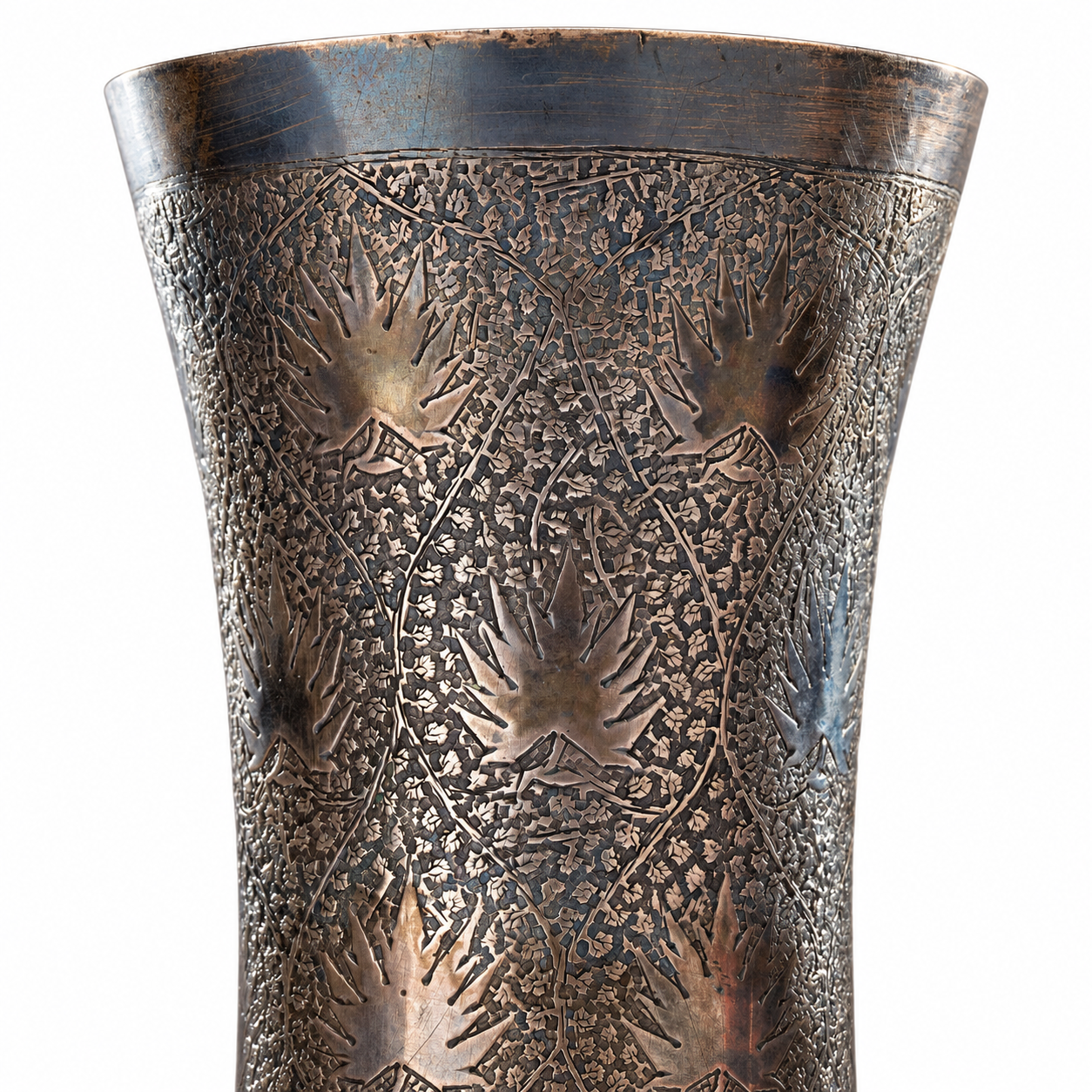
19th-Century Kashmiri Silver Beaker with Chinar Leaves
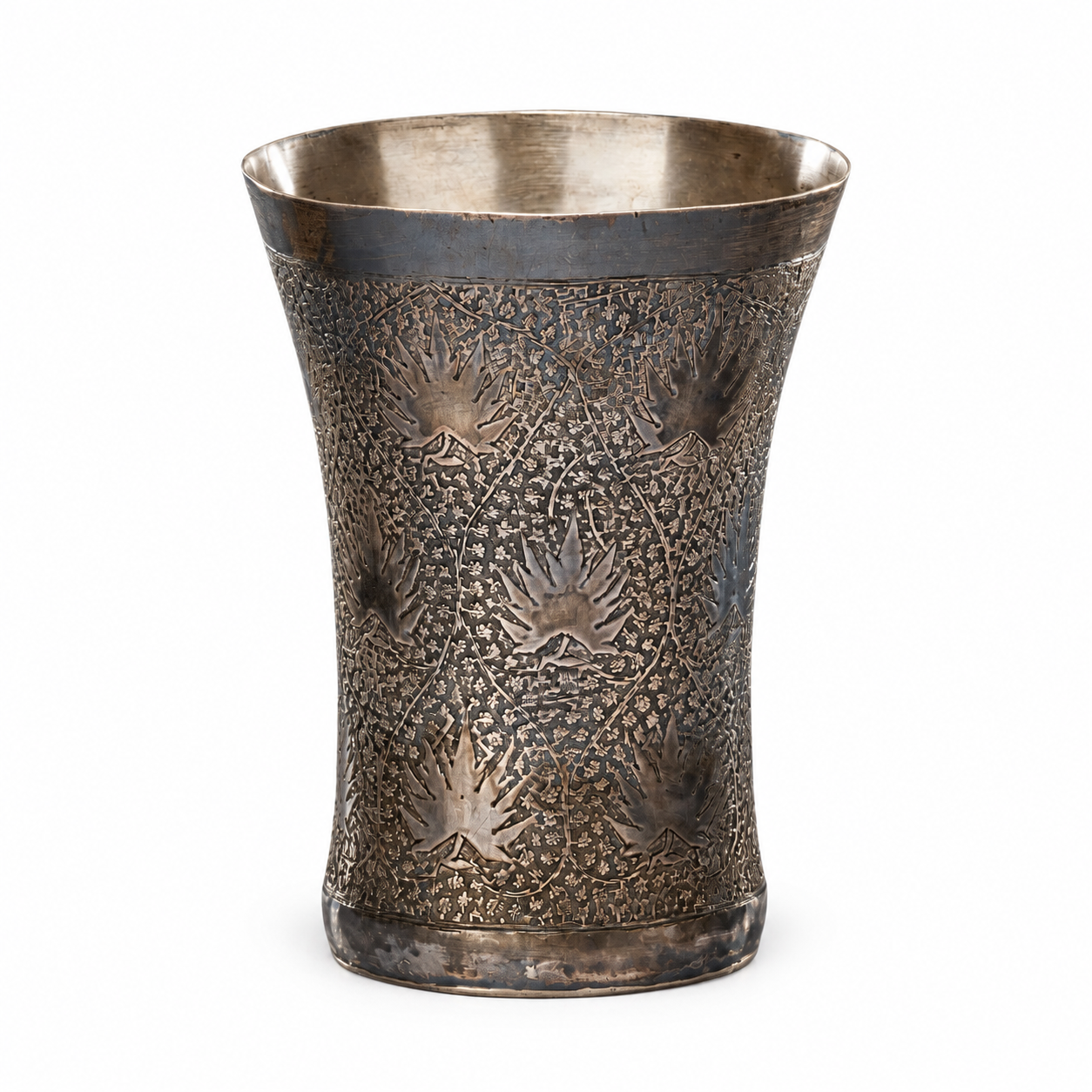
A silver drinking cup from the 1800s, attributed to Kashmir, a Himalayan region known for its intricate textiles and decorative metalwork. Finely ornamented silverware like this was made for affluent local households and European buyers, used at the table or given as gifts. This beaker’s original owner is unknown, but was recently acquired from an auction house in England.
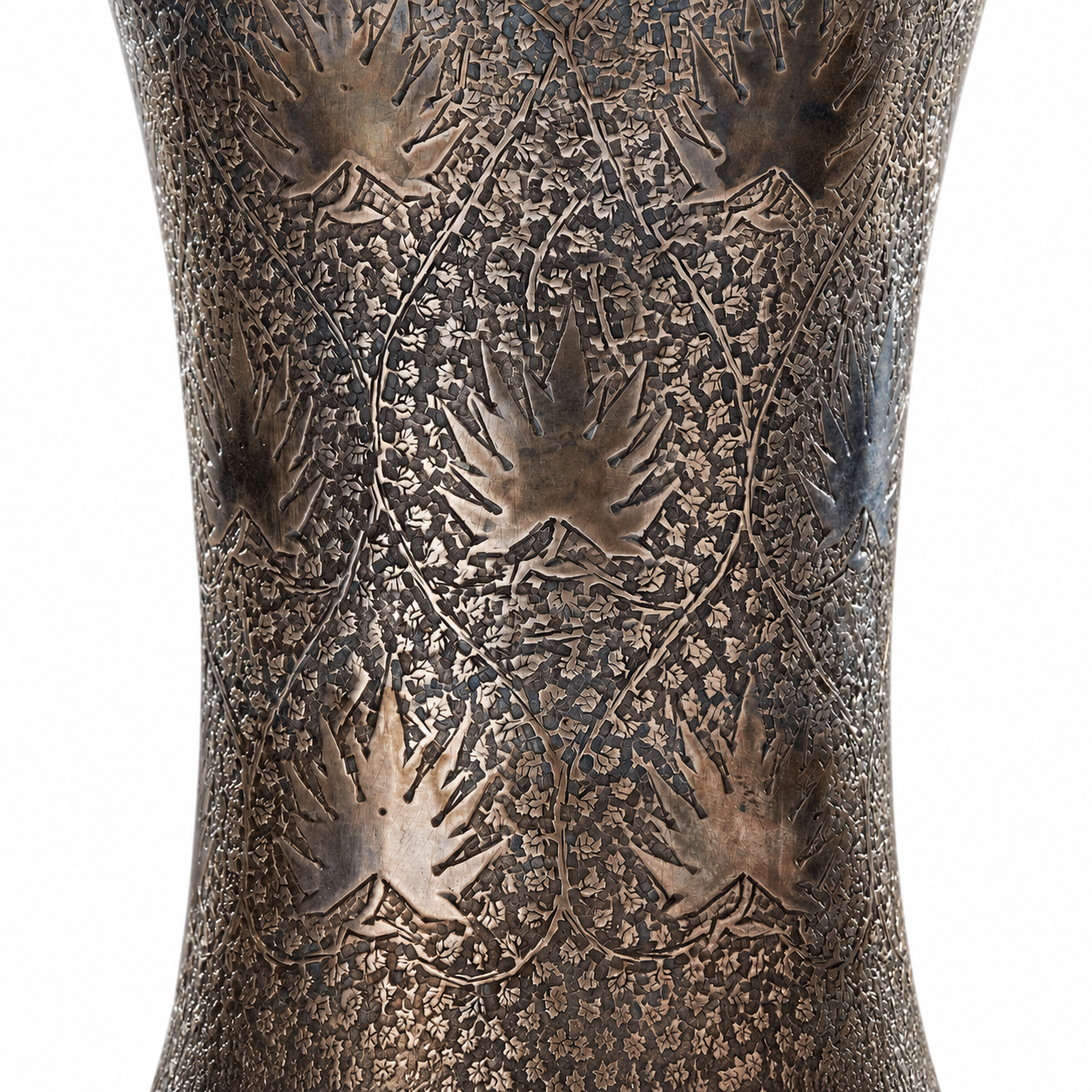
Scrolling vines cover the body, punctuated by raised leaves resembling Platanus orientalis, the Oriental plane tree, known in Kashmir as the chinar. Its distinctive foliage is a recurring motif in Kashmiri silver. Plain borders frame the dense decoration, while the interior is smooth.
The surface combines chasing—shaping and defining the metal with punches—and engraving, which cuts fine lines into it. The intricate botanical pattern reflects the relationship between Kashmir’s silverwork and textile traditions.
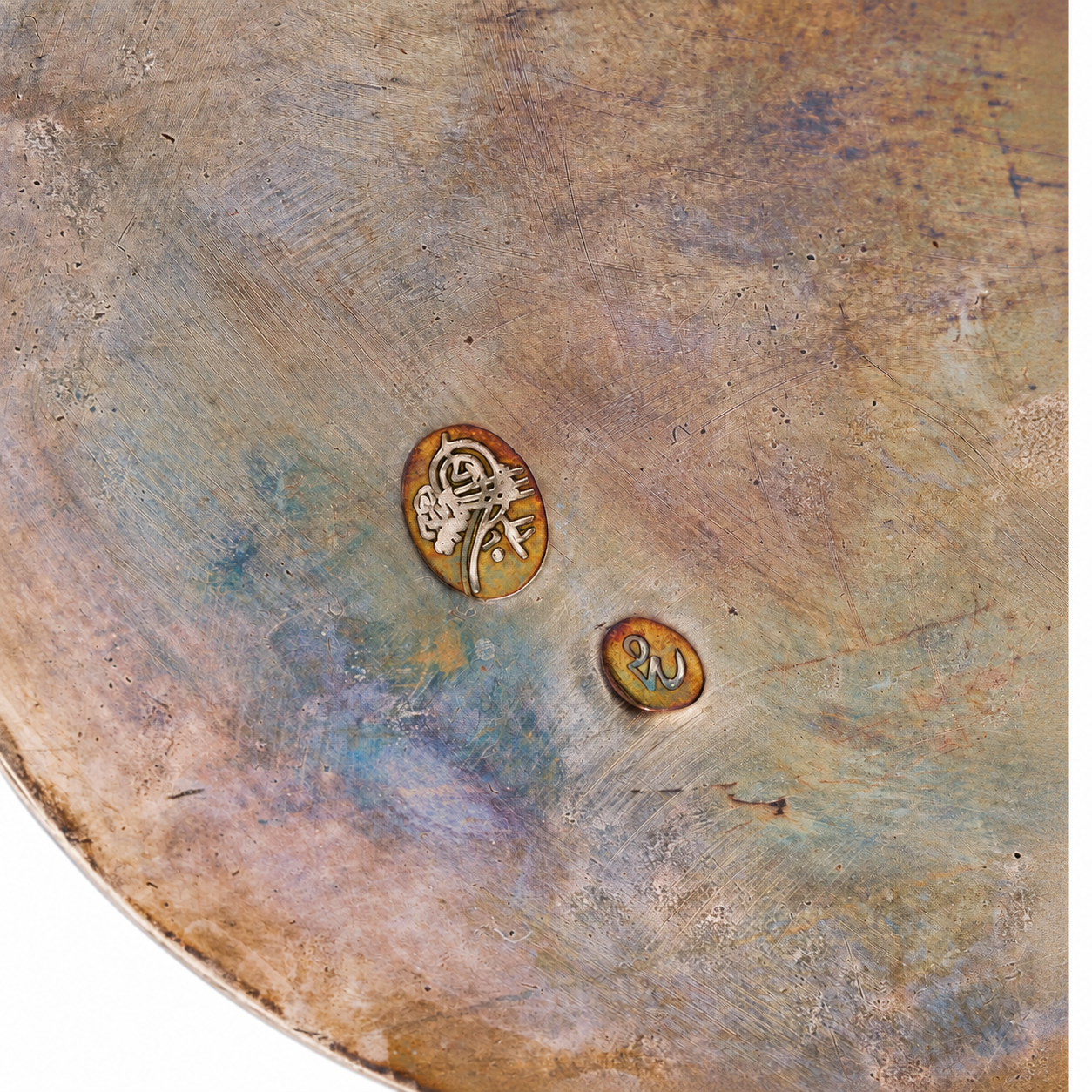
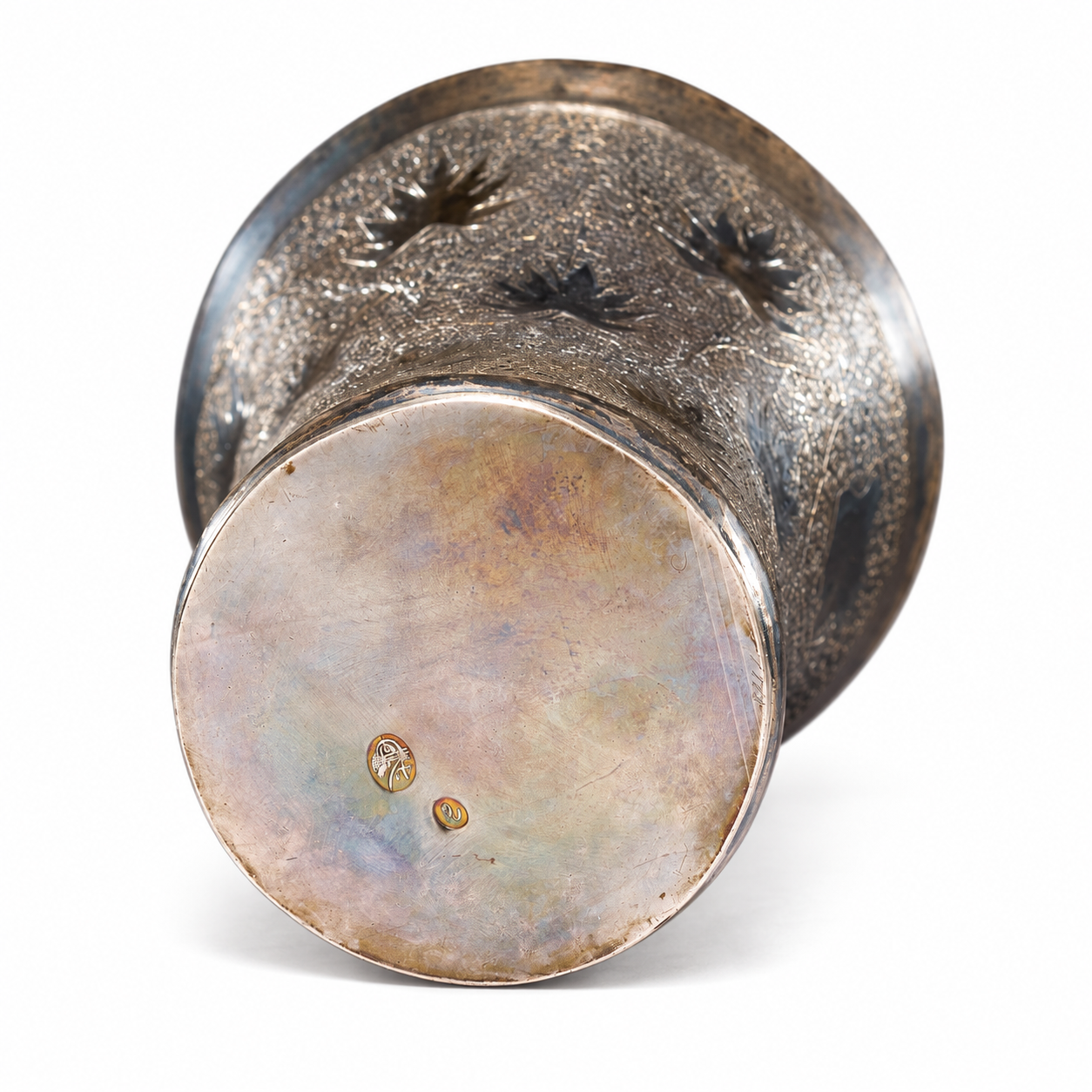
The base bears Ottoman Turkish marks: a tughra, the reigning sultan’s calligraphic monogram, and sah, meaning “correct” or “genuine,” used in the Ottoman system for verifying silver. These marks provide an Ottoman connection, although the beaker’s journey between regions is undocumented.
Such marks are commonly associated with .900 silver: 90% silver alloyed with other metals for strength, compared with sterling’s 92.5%. The exact fineness of this piece has not been independently verified.
Originally a handleless drinking cup; now a particularly beautiful vessel for a few garden stems.
Date: 19th century
Height: 11 cm / approximately 4.3 inches
Weight: 121 g
Attribution: Kashmir, with Ottoman Turkish marks
Material: Silver; exact fineness unverified